Face Shape - Face Rating, Hair
- 3.9
- Rating
- 1.00M
- Installs
- Free
- Price
 Analysis by App-foxy
I tried Face Shape - Face Rating, Hair as a beauty app for the moments when you want a quick second opinion about your look rather than a full consultation. Its main appeal is the combination of face analysis, hairstyle suggestions, photo enhancement, and a “pretty scale” presentation in one place. I found it most useful as a visual exploration tool: it can help you compare ideas, notice how a different haircut changes the balance of a portrait, and prepare questions before visiting a stylist.
That convenience also needs a realistic explanation. An AI face assessment is not the same as a professional hair consultation, and a flattering edited image is not a guarantee that a style will suit your hair texture, maintenance routine, or face in everyday lighting. My overall impression is positive when the app is treated as a playful planning aid, but much less so when someone expects an objective verdict about their appearance.
How the app feels in its current form
The app comes from GlintTec Apps and sits in the beauty category. It is free to install, with optional purchases priced from $0.99 to $15.99 per item. The Everyone age rating makes it approachable for a broad audience, although I would still encourage younger users to treat appearance scores lightly rather than as judgments about their worth.
You May Also Like

 Blood Strike: 2.5 Anniversary
Blood Strike’s Loadouts Turn Every Drop Into a Tactical Gamble
A close look at Blood Strike’s custom loadouts: how fast access to signature weapons reshapes its battle royale rhythm, rewards preparation, and narrows the gap between fights.

 Pandora - Music & Podcasts
Pandora’s Music Is Easy to Start, but Harder to Recover
Pandora’s strength is its low-effort path from a seed to a station. Its weak spot is how much confidence it asks you to place in connection, setup, and quiet recovery.

 8 Ball Pool
 Is Built on Rivalries, Rematches, and Routine
A close look at the rivalries, rematches, shared routines, and unanswered safety questions that turn a quick pool match into a persistent mobile community.

 Samsung Music
’s Quiet Strength Is Playing What You Already Own
Its reach comes less from spectacle than from dependable access to a personal library. That simplicity is both the app’s strongest retention engine and its ceiling.

 AccuWeather: Weather Radar
AccuWeather Review: A Quick, Clear Forecast for Everyday Decisions
For everyday plans, the best forecast is the one you can understand quickly. AccuWeather makes rain timing, radar, and local conditions easy to act on, with a few trade-offs.

 Hill Climb Racing
Why Hill Climb Racing Still Turns Crashes Into One More Run
A tiny car, a bumpy hill and one more upgrade: Hill Climb Racing keeps resurfacing because its simple chaos makes every near-miss feel personal.
More From Our News Desk
View All News


Its reach suggests that this is not an obscure experiment. The app has passed over a million installs and holds a 4.0 average from around 7.7 thousand ratings. Those figures tell me that many people are willing to try this kind of visual tool, but they do not prove that every analysis is accurate. The experience depends heavily on the photograph: a straight-on, well-lit image is far more useful than a dark selfie taken from below.
When I use an app like this, I begin with a simple goal instead of uploading a random gallery photo. If I want hairstyle guidance, I choose a recent image where my face is visible, my hair is not covering half of my features, and there are no strong filters already changing my appearance. This small preparation step makes the result easier to interpret and prevents me from blaming the analysis for a poor source image.
Face analysis is best treated as a starting point
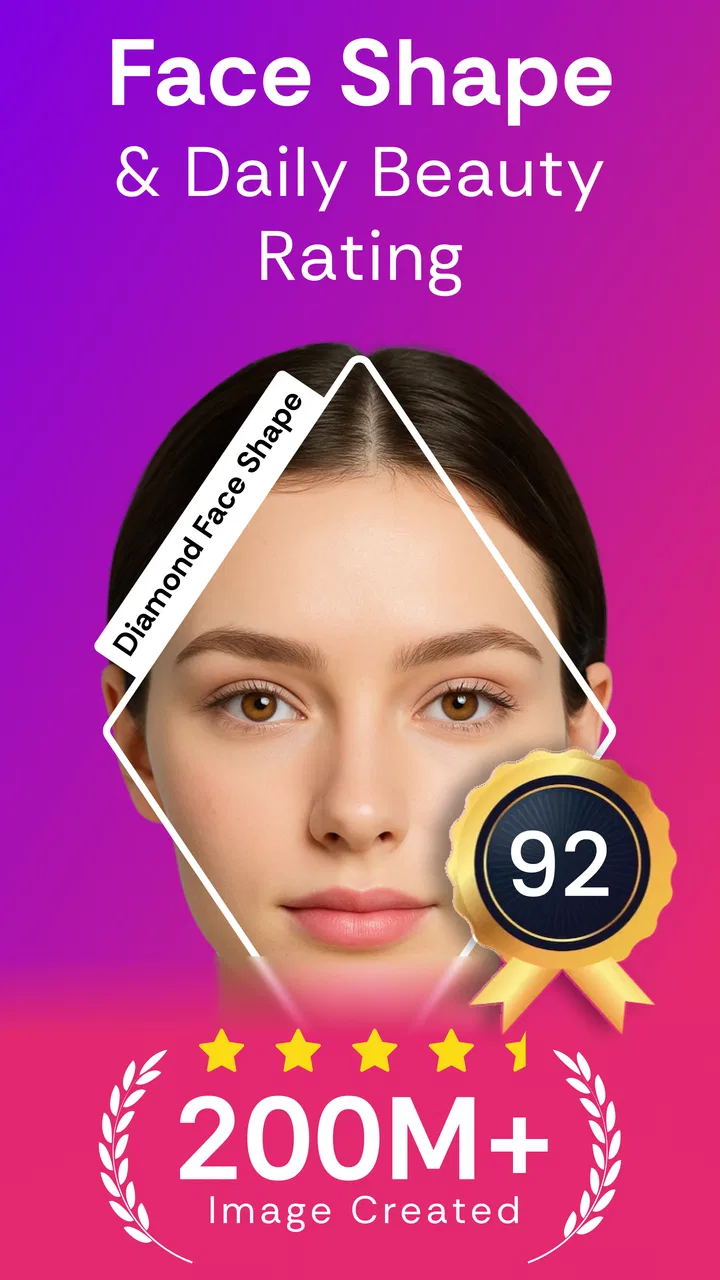
The face-shape element is appealing because it turns an ordinary portrait into something that feels more structured. Rather than searching through generic haircut articles, I can use the result as a prompt for exploring styles that may complement my proportions. That is useful when I am undecided, especially before making a major change.
Still, face shape is only one part of a haircut decision. Hair density, curl pattern, cowlicks, forehead height, glasses, lifestyle, and the amount of time available for styling can matter just as much. A cut that looks balanced on a generated or enhanced image may be difficult to recreate on naturally fine or tightly curled hair. I would use the analysis to narrow a conversation, not to make the final decision alone.
The “pretty scale” is the feature I would approach most carefully. A numerical-looking beauty judgment can feel authoritative even when it is simply an automated interpretation of a single image. I found the concept more entertaining than scientifically meaningful. If you enjoy experimenting with portraits, it can add a playful layer; if scores tend to affect your confidence, skipping that part is the healthier choice.
Hairstyle exploration has practical value
The hairstyle side is where the app can become genuinely useful. Before booking an appointment, I can compare the general direction of a shorter, longer, softer, or more structured look. Even if the preview is not perfectly realistic, it helps me describe what I want. Showing a stylist a visual reference is usually more productive than saying “something different” and hoping we imagine the same result.
One useful workflow is to save a small set of ideas rather than chasing the most dramatic transformation. I would compare styles with similar lengths but different shapes, then ask which one fits my daily routine. This avoids a common mistake with virtual makeovers: choosing the most striking image even though it would require more styling time than I am willing to spend.
Another practical tip is to test the app with more than one suitable photograph. A single pose can exaggerate a jawline or make the forehead appear larger. If the suggested face shape changes noticeably between clear images, I would consider that a reminder to stay cautious rather than a reason to keep testing until I get a preferred answer. Consistency matters more than receiving the result I hoped for.
Photo enhancement changes how the result should be read
The photo-enhancement component can make a portrait look cleaner and more presentation-ready, which is helpful when comparing hairstyle concepts. It can also make the final image feel more polished than the original person would look in normal indoor light. That difference is easy to overlook, especially when an enhanced preview appears more convincing than a plain camera image.
For that reason, I separate two questions: “Does this edit look attractive?” and “Would this hairstyle work for me?” The first is about presentation; the second involves real-world factors the app cannot fully capture. Keeping those questions separate is one of the most important habits for using this app sensibly.
I would also avoid using an enhanced image as the only reference for a stylist. A better approach is to keep the original photo beside the preview and explain the part that interests you: the length, fringe, layers, parting, or overall outline. That gives a professional something workable instead of asking them to reproduce an edited face.
What the current release means for users
The current version is 1.0.227, and the app supports Android 7.0 or later. That broad compatibility is convenient for people using older Android phones, although the quality of the experience can still depend on the device camera, screen, and processing speed. I would check that the phone has enough free space and that the chosen image is stored locally before starting a detailed session.
The release number shows an actively maintained product line rather than an app frozen at its first launch. The app was released on March 15, 2023, so existing users have had time to see it develop through later version updates. I would not assume that a new version automatically makes face analysis more accurate, though. Version changes can improve stability or presentation without changing the fundamental limits of AI-based beauty interpretation.
For someone who already uses it, the main benefit of staying current is having the latest available build rather than relying on an older installation. That is a sensible habit for any app that processes photographs. At the same time, I would save any hairstyle references I care about outside the app, because a personal mood board should not depend entirely on one tool or one session.
The free entry point makes experimentation easy. I can try the basic experience before deciding whether any optional purchase is worthwhile. This is important because the app’s value is subjective: one person may enjoy repeated style comparisons, while another may only need a single face-shape suggestion and have no reason to spend money.
Where it beats ordinary alternatives
Compared with searching images on a general web search, this app offers a more personal starting point because the ideas are connected to my own portrait. That reduces the distance between inspiration and decision-making. It is also faster than collecting dozens of celebrity or model photos and trying to imagine how their proportions translate to mine.
Compared with a salon consultation, however, it is much less complete. A stylist can inspect the hair itself, ask about maintenance, consider how it grows out, and adapt a cut to texture and condition. The app is better for preparing for that conversation than replacing it. I see the strongest combination as using the app at home, then bringing two or three realistic ideas to a professional.
Compared with a standard photo editor, its advantage is the beauty-specific direction. A general editor may give me more control over retouching, but it does not necessarily help me think through face shape or hairstyle choices. On the other hand, someone who wants precise manual editing rather than automated suggestions may find a dedicated editor more satisfying.
Everyday situations where it earns a place
Imagine I have a haircut appointment on Saturday and keep changing my mind about a fringe. On a weekday evening, I can take a clear front-facing photo, explore a few fringe variations, and note which versions still look appealing after I compare them with my natural hairline and usual clothing. I arrive at the appointment with a clearer request, even if the final cut is adjusted by the stylist.
It can also help someone returning to a shorter style after years of long hair. The emotional barrier is often uncertainty rather than a lack of inspiration. Seeing several possible directions can make the decision feel less abstract. I would still ask for a gradual change if I am nervous, because a preview cannot tell me how quickly I will miss the old length.
For content creators or people preparing a profile photo, the enhancement tools may be handy for exploring presentation. The sensible use is to compare framing and hairstyle ideas, not to erase every natural feature. A profile image that looks unlike me may attract attention briefly but create an awkward expectation when people meet me in person.
Important limits before you rely on the result
The biggest limitation is the gap between a two-dimensional photo and a real person. Lighting, camera lens distortion, expression, head angle, makeup, and hair placement can all influence an automated reading. I would be especially skeptical of a result produced from a heavily angled selfie or a photo with strong shadows.
The second limitation is that “suitable” does not mean “practical.” A hairstyle can complement a face outline while demanding daily heat styling, frequent trims, or products I do not want to use. Before acting on a preview, I would ask myself three grounded questions: how will this look without styling, how much upkeep can I manage, and what happens as it grows out?
The third is emotional. Beauty scores can encourage comparison and repeated checking. If I notice myself retaking photos to obtain a better number, the app has stopped being a useful planning tool. In that situation, a mood board of cuts I genuinely like, or an honest conversation with a trusted stylist, is a better alternative.
There is also a cost consideration. Although the app is free to start, optional purchases can add up if I repeatedly unlock or use paid items. I would explore the no-cost experience first and decide whether it provides enough value before buying anything. A single purchase is easier to justify when it supports a specific decision; ongoing spending for reassurance is harder to defend.
Who should use it and what I would watch next
I would recommend this app to someone who enjoys visual experimentation, wants help naming a face shape, or needs hairstyle references before a salon visit. It is particularly useful for turning vague ideas into a shortlist. I would not recommend making it the deciding authority for a major appearance change, especially for users who are sensitive to ratings or expecting professional-level analysis.
If you have an older Android phone, the minimum operating-system requirement is Android 7.0, so compatibility is relatively welcoming. The practical test is still simple: install it, use a clean photograph, and see whether the suggestions feel understandable and relevant. If the result seems inconsistent across good images, treat that as a limit of the tool rather than a hidden truth about your face.
As the product continues to evolve, I would pay attention to whether updates make the suggestions more consistent across different lighting and hair types, whether previews become more realistic without over-enhancing faces, and whether the app gives users clearer control over paid features. Those are the changes that would affect long-term usefulness more than a new visual style or a larger collection of looks.
I would also like to see the experience remain transparent about the difference between entertainment, photo editing, and genuine beauty guidance. The more clearly those roles are separated, the easier it is for users to make good decisions. A trustworthy result should encourage experimentation without pretending that an automated score can define attractiveness or predict a perfect haircut.
My final view is that Face Shape - Face Rating, Hair is a worthwhile free starting point for hairstyle discovery, provided I keep its conclusions in perspective. Its strongest role is helping me prepare: take a sensible photo, compare a few directions, identify what I like, and discuss the practical details with a stylist. Its weakest role is acting as a judge of personal beauty. Used with that distinction in mind, it offers useful inspiration without asking me to surrender my own judgment.
FAQs for Face Shape - Face Rating, Hair
01What features does Face Shape - Face Rating, Hair offer?
Face Shape - Face Rating, Hair provides users with a variety of tools to analyze face shapes, rate facial features, and suggest hairstyles that complement your look. It uses advanced algorithms to deliver personalized insights. Additionally, users can explore makeup tips and try virtual makeovers directly through the app.
02Is Face Shape - Face Rating, Hair free to use?
The app offers a free version with basic features, but for access to premium tools and ad-free experience, users can opt for a subscription. The paid version provides enhanced face analysis, more hairstyle options, and detailed beauty tips, making it a worthwhile investment for beauty enthusiasts.
03How accurate is the face shape analysis in the app?
The face shape analysis utilizes cutting-edge AI technology to deliver precise results. While accuracy can vary based on lighting and photo quality, the app is generally reliable for most users. It’s recommended to use well-lit, clear images for the best analysis outcomes.
04Can I use Face Shape - Face Rating, Hair on both Android and iOS devices?
Yes, the app is designed to be compatible with both Android and iOS platforms. It offers a seamless user experience across devices, allowing you to enjoy its features whether you are using a smartphone or a tablet, ensuring versatility and convenience for all users.
05Is my personal data safe with Face Shape - Face Rating, Hair?
User privacy is a priority for Face Shape - Face Rating, Hair. The app complies with data protection regulations, ensuring that your photos and personal information are secure. It does not share data with third parties without consent, providing peace of mind to its users.
Pros
- User-friendly interface for easy navigation.
- Accurate face shape analysis.
- Wide range of hairstyle suggestions.
- Real-time face rating feature.
- No in-app purchases required.
Cons
- Limited to basic face shapes.
- Needs internet for full functionality.
- Occasional ad interruptions.
- Limited customization options.
- Some features may not be intuitive.

Face Shape - Face Rating, Hair
Gallery